Informational guide. Day Spa Vallarta is a directory: we do not perform these treatments and we do not sell them. We explain them so that you walk into the treatment room — or the doctor's office — knowing what to ask. Assessment and application of any medical procedure belong to a licensed professional with specific training.
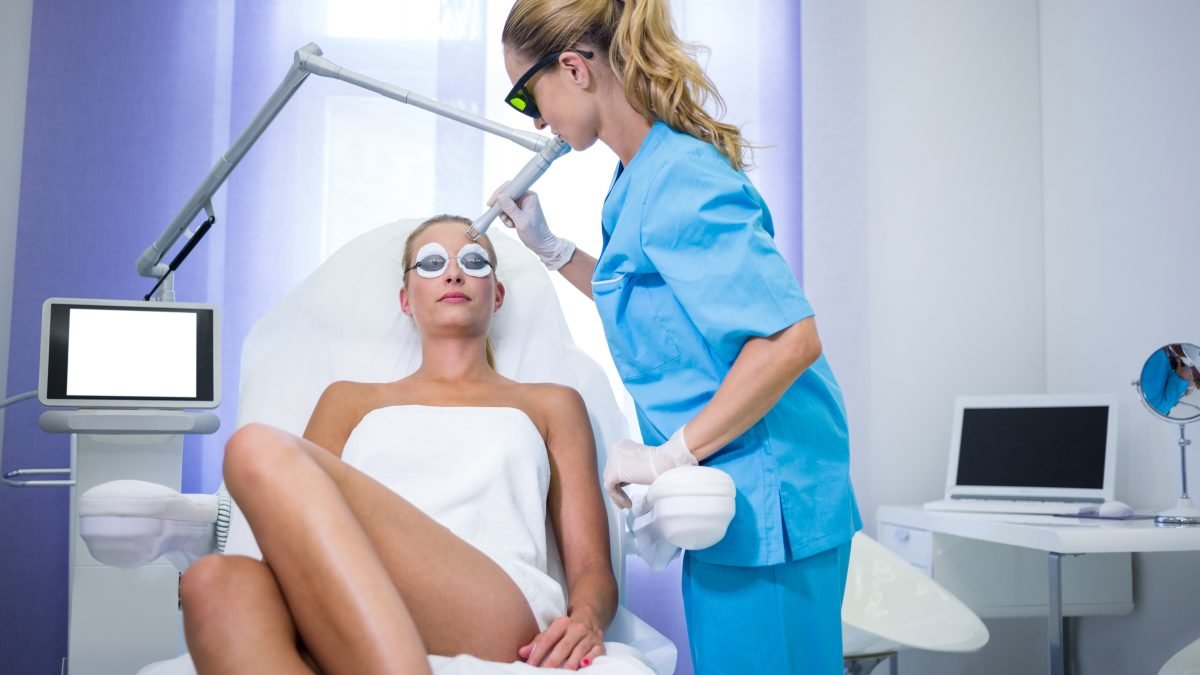
Both do the same thing by different routes: heating tissue to a temperature high enough that existing collagen fibres contract and fibroblasts start producing new collagen. The difference is how that heat is delivered and how deep it goes.
Radiofrequency
It emits electromagnetic waves that meet resistance in the tissue and generate heat diffusely. It is applied with a handpiece gliding on conductive gel and feels like a warm massage that gradually gets hotter. It is comfortable, needs no anaesthetic and has no downtime: you are red for a few minutes and then you get on with your day.
It works on mild laxity, a poorly defined jawline, an early double chin and skin quality on the neck and décolletage. It needs a series: six to ten weekly sessions, plus maintenance. A one-off session does nothing lasting, even if you walk out looking better thanks to the thermal swelling of the moment.
Focused ultrasound
It concentrates energy at an exact point at a set depth, creating points of thermal coagulation without damaging the surface. It reaches deeper, including the layer surgeons tighten in a facelift. It is less comfortable — some describe it as hot pinpricks from the inside —, it takes far fewer sessions (sometimes one) and the result is assessed at three to six months.
Because of that depth and its ability to damage tissue if misapplied, this is medical territory. Areas such as the jawline contain structures that do not tolerate improvisation.
Realistic expectations
This is the section to read twice. Both technologies give a subtle, progressive result: better definition, skin that feels firmer, a slightly cleaner neck. They do not turn the clock back ten years, they do not remove genuinely excess skin and they do not replace a surgical facelift. If your laxity is advanced, spending on ten device sessions is trading money for a polite disappointment.
And be wary of immediate "before and after" photos: heat causes oedema, and inflamed tissue looks tight. The honest photo is the one taken at three months.
Common contraindications
- Pacemakers and implanted electronic devices (radiofrequency).
- Pregnancy.
- Recent filler in the area: procedures need to be spaced out.
- Thread lifts, metal implants or plates in the treatment area.
- Active skin infections or lesions.
What to ask
Ask for the make and model of the device and check that it exists; ask how many sessions they are proposing and what happens if you see no change; ask whether they will monitor skin temperature during the session (with radiofrequency that is standard, and it is the difference between heating properly and burning). A business that cannot name its own machine is a bad place to have energy delivered into your face. Spa Business goes into the differences between technologies in its guide to non-surgical facial lifting.
Frequently asked questions
Does radiofrequency hurt?
No. You feel building warmth and it should be tolerable throughout. If at any point it burns, say so immediately: that is where burns happen.
How many sessions do I need?
Facial radiofrequency is usually proposed as six to ten weekly sessions plus maintenance every few months. Focused ultrasound works in far fewer, sometimes a single one, and is reassessed at six months.
Does it help a double chin?
For an early double chin caused by laxity, it helps. For one caused by fat accumulation the response is limited: the problem is not firmness and needs a different approach.
Can I have it if I have fillers?
Tell them beforehand. Heat can affect some materials and the usual recommendation is to leave time between procedures. Whoever assesses you must know exactly what you have and since when.
Where can you get this in Puerto Vallarta?
The directory lists the bay's spas, skin studios and salons with their services, area and direct contact. Compare before booking, and always ask who will actually perform the procedure.