Informational guide. Day Spa Vallarta is a directory: we do not perform these treatments and we do not sell them. We explain them so that you walk into the treatment room — or the doctor's office — knowing what to ask. Assessment and application of any medical procedure belong to a licensed professional with specific training.
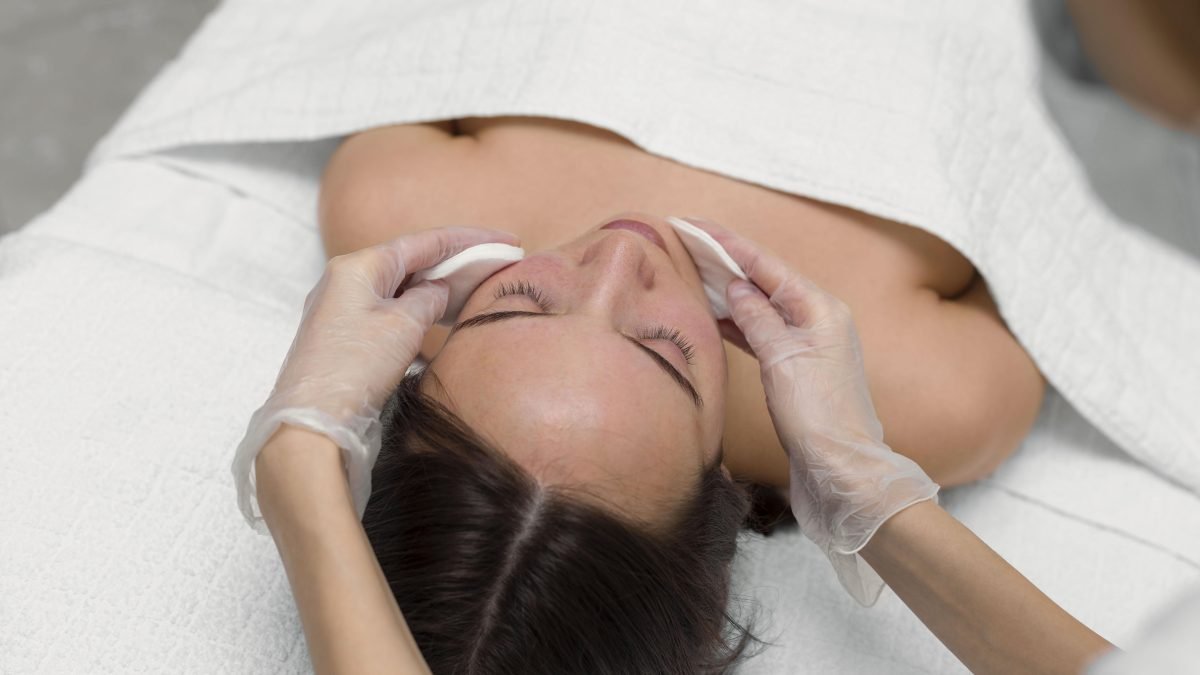
This is the treatment most people book on their first ever spa visit, and it is also the worst explained. "Deep cleansing facial" is not a standardized procedure: it is a multi-step protocol that every treatment room assembles its own way. Two spas on the same street in the Romantic Zone can sell the same name and do different things.
What it should include
A complete protocol has five moments, and it is worth asking which ones are included:
- Makeup removal and surface cleansing. Two passes: one to lift makeup and sunscreen, another to clean the bare skin underneath.
- Exfoliation. Mechanical (a gel with particles, a brush) or enzymatic (papaya or pineapple enzymes that loosen dead cells without scrubbing). On sensitive skin the enzymatic route is kinder.
- Softening. Steam, hot towels or an emollient gel so the contents of the pores come out with less pressure.
- Extraction. The part that actually earns the word "deep": clearing open comedones (blackheads) and closed ones. It is done with gloves, with fingers wrapped in gauze or with an extractor, and it should hurt very little and bleed not at all.
- Calming and sealing. A decongesting mask, a soothing active and sunscreen at the end. Without sunscreen on the way out, the facial works against you.
If the "cleansing facial" you are offered lasts twenty minutes and ends with a pretty mask, it is a relaxation facial under another name. Nothing wrong with that — it feels wonderful — but do not expect the congestion on your nose to disappear.
What it cannot do
This is where most expectations break. A cleansing facial does not erase acne scars, does not permanently close pores (pore size is largely genetic; what changes is how full they are), does not remove dark spots and does not cure active acne. On inflammatory acne — those red, deep, painful lesions — aggressive extraction can make the resulting mark worse. That belongs with a dermatologist, not in a treatment room.
It is not an anti-aging treatment either. Your skin looks smoother and brighter for a few days because you removed dead cells and oxidized sebum, not because anything was stimulated in the dermis. Other procedures in this guide do that job, like microneedling or chemical peels.
How often
The usual rule is every four to six weeks for combination or oily skin, and every eight to twelve for dry or sensitive skin. More often is not better: extraction is controlled trauma and skin needs to repair. A full epidermal renewal cycle takes about a month; booking a cleansing facial every two weeks means interrupting that cycle over and over.
What to ask before booking
- How long is the session, and how many of those minutes are actual extraction?
- Do you use steam? If you have rosacea or visible broken capillaries, prolonged steam is not for you.
- What product line do you work with and what actives does it contain? It does not need to be a famous brand, but they should be able to tell you.
- What will you put on my skin at the end, and can I walk outside afterwards?
That last one matters a lot here. If you leave the treatment room at two in the afternoon in a Vallarta August with freshly exfoliated skin and no sunscreen, you are asking for a dark spot. We cover that separately in the entry on before and after care in a tropical climate.
Who performs it
A trained facialist or esthetician. It is not a medical procedure as long as it stays on the surface: gentle exfoliation, comedone extraction and a mask. The moment somebody proposes "opening" an inflamed lesion, injecting anything or applying a medium-depth peel, you are in different territory and you need a physician. If you want the clinical detail of which actives do what to the skin, Spa Business covers deep facial cleansing from the medical side, and its guide on how to improve skin quality explains what actually changes texture in the long run.
Frequently asked questions
Does a deep cleansing facial hurt?
Extraction is uncomfortable, especially on the nose and chin, but it should not be painful and should not leave your face bleeding. If the facialist keeps pressing a lesion that will not release, the right call is to leave it: forcing it is what leaves a mark.
Can I wear makeup afterwards?
Better to wait twelve to twenty-four hours. Your pores are open and clean; covering them straight away with foundation is the recipe for going back to square one. Sunscreen, on the other hand, from minute one.
I broke out two days later — is that normal?
It can happen: once the surface is cleared, whatever was halfway up comes out. A few lesions that resolve in four or five days are expected. A widespread breakout is not — tell the spa and do not repeat the same protocol.
Is a cleansing facial a good idea the day before an event?
Not really. The usual advice is seven to ten days before, so any redness or reactive breakout has time to settle. For the day before, a hydrating facial with no extraction is far safer.
Where can you get this in Puerto Vallarta?
The directory lists the bay's spas, skin studios and salons with their services, area and direct contact. Compare before booking, and always ask who will actually perform the procedure.