A ninety-minute massage brings your heart rate down. Two days with no phone signal, no street lighting and not a single speaker playing change something else: your sleep. And in Banderas Bay, that is not something you find in the hotel zone. You find it by driving ninety minutes south.
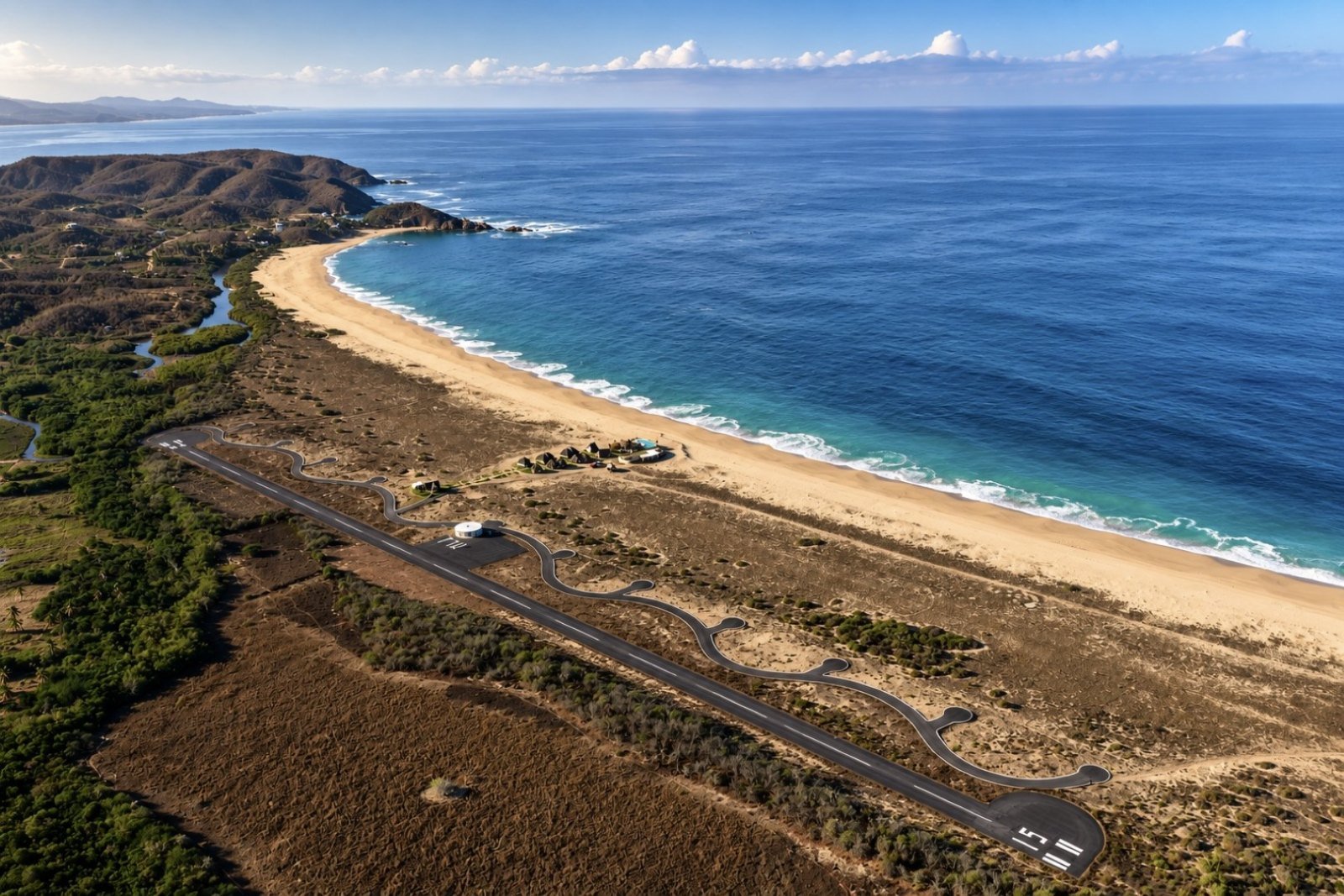
The place is called Mayto, it sits in the municipality of Cabo Corrientes — on the strip that opens the Costalegre region of Jalisco — and it has been the favourite escape of Vallarta locals looking for a real beach for decades. What changed recently is that you can now arrive by small plane, sleep at the edge of the sand and, in a few years, walk through a park built around the zodiac.
We wrote this guide because people keep asking for it: after a treatment, the next question is almost always "and where do I go to actually disconnect?". This is the answer.
Why silence is a treatment
In the spa we work with the same thing all day long: an overstimulated nervous system. Notifications, blue light at eleven at night, permanent background noise. A massage interrupts that state for a while; the environment either sustains it or undoes it the moment you step outside.
Mayto is the environment that sustains it. There is no city around, no street lighting, phone signal is intermittent because of geography — not because of anyone's decision — and at night the only thing you hear is the surf. A weekend there does what no treatment can do on its own: it resets your sleep cycle, because you go to bed when it gets dark and wake with the light.
And the sky, which is the main argument
With no light pollution around, in Mayto the Milky Way is visible to the naked eye. No telescope, no app: just look up. For a lot of people who live in cities it is literally the first time they have seen it. It is the kind of experience the wellness industry has spent years trying to package, and here it is simply there, free, on every clear night.
Getting there
There are two ways.
By road: federal highway 200 towards Manzanillo from Puerto Vallarta, up to El Tuito and then down the road that leads to the coast. It is around ninety minutes. The final stretch is unpaved; in the dry season a normal car handles it slowly, in the rainy season a high-clearance vehicle is advisable.
By air: Mayto has its own airport, with a runway, apron and terminal, formally opened on 20 June 2025. It serves general aviation and private or charter flights — there are no commercial airlines — and the trip from Puerto Vallarta is about a 15-minute flight.
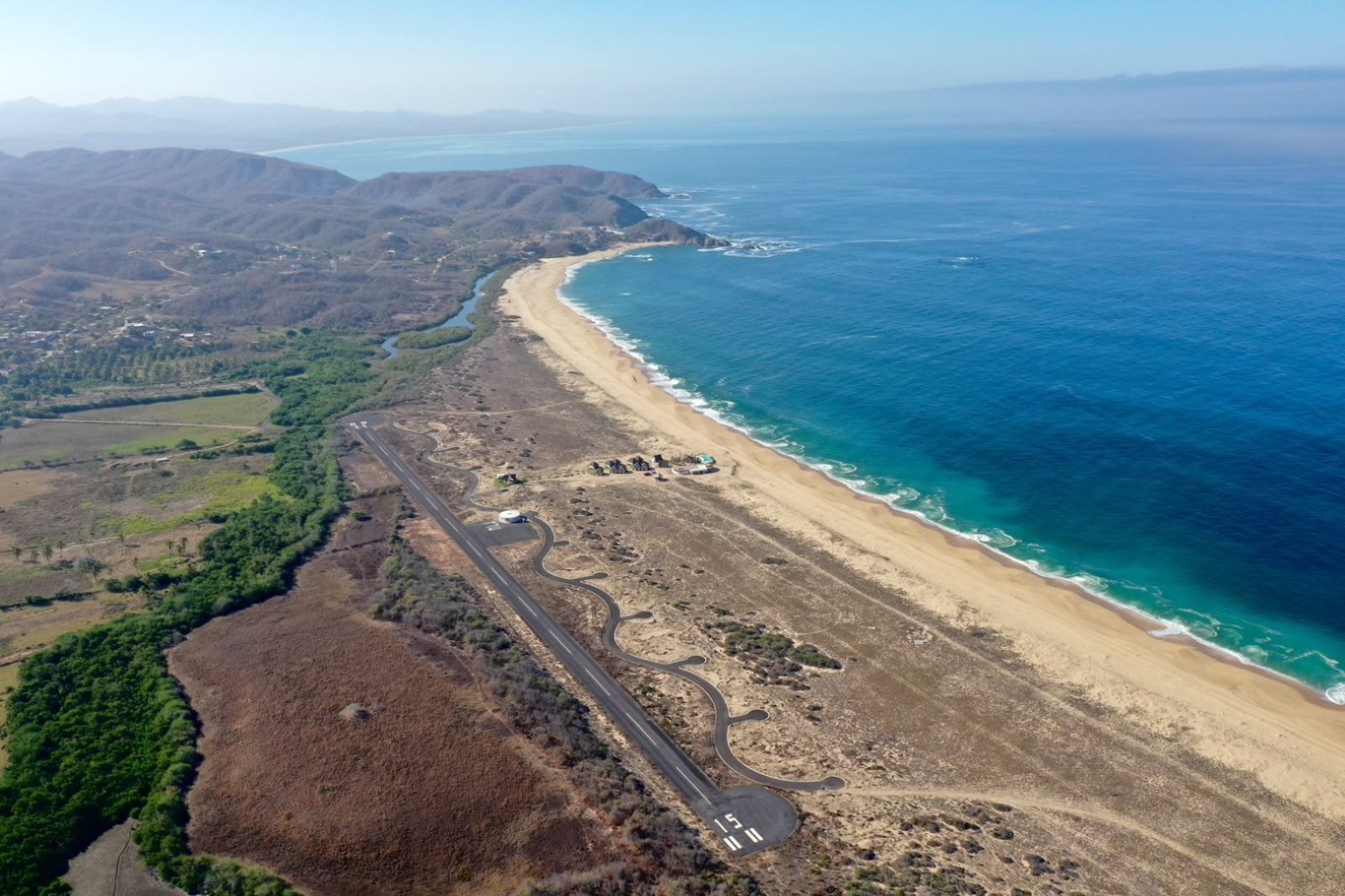
That detail is worth telling: the project presents the airstrip as Mexico's first themed airport, with the taxiway traced in a sinuous shape as a tribute to the legacy of Tenochtitlan. From the air it is unmistakable.
Where to sleep
The lodging is small on purpose: a handful of palapa-roofed suites lined up towards the sand, a pool and a common area facing the Pacific. No towers.
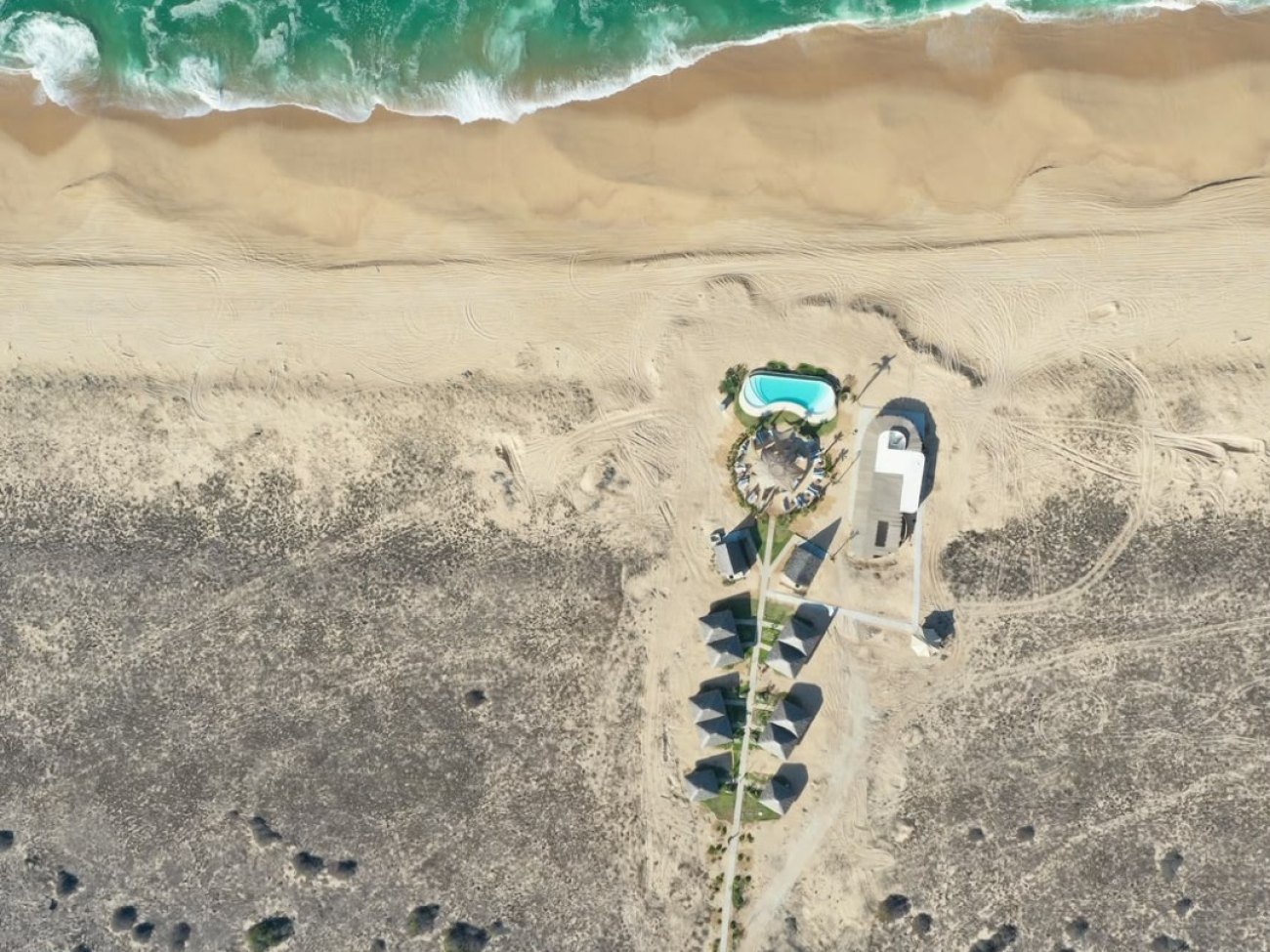
The Mayto hotel runs a single room category instead of splitting into five: a king bed under a palapa roof, warm lighting, a private terrace and the ocean in front. The figures it describes itself with are 100% ocean-view rooms, local hosts 24/7 and zero city noise. It is open all year and you book directly with the destination, which also arranges the whole arrival if you are flying in.
The Astrological Park: 12 temples, 12 signs
This is the part of the project that resembles nothing else on the coast. The Astrological Park is organized around the zodiac: twelve roundabouts, one per sign, working as gateways to twelve Zodiacal Temples, each with its own aesthetic and symbolic reading.
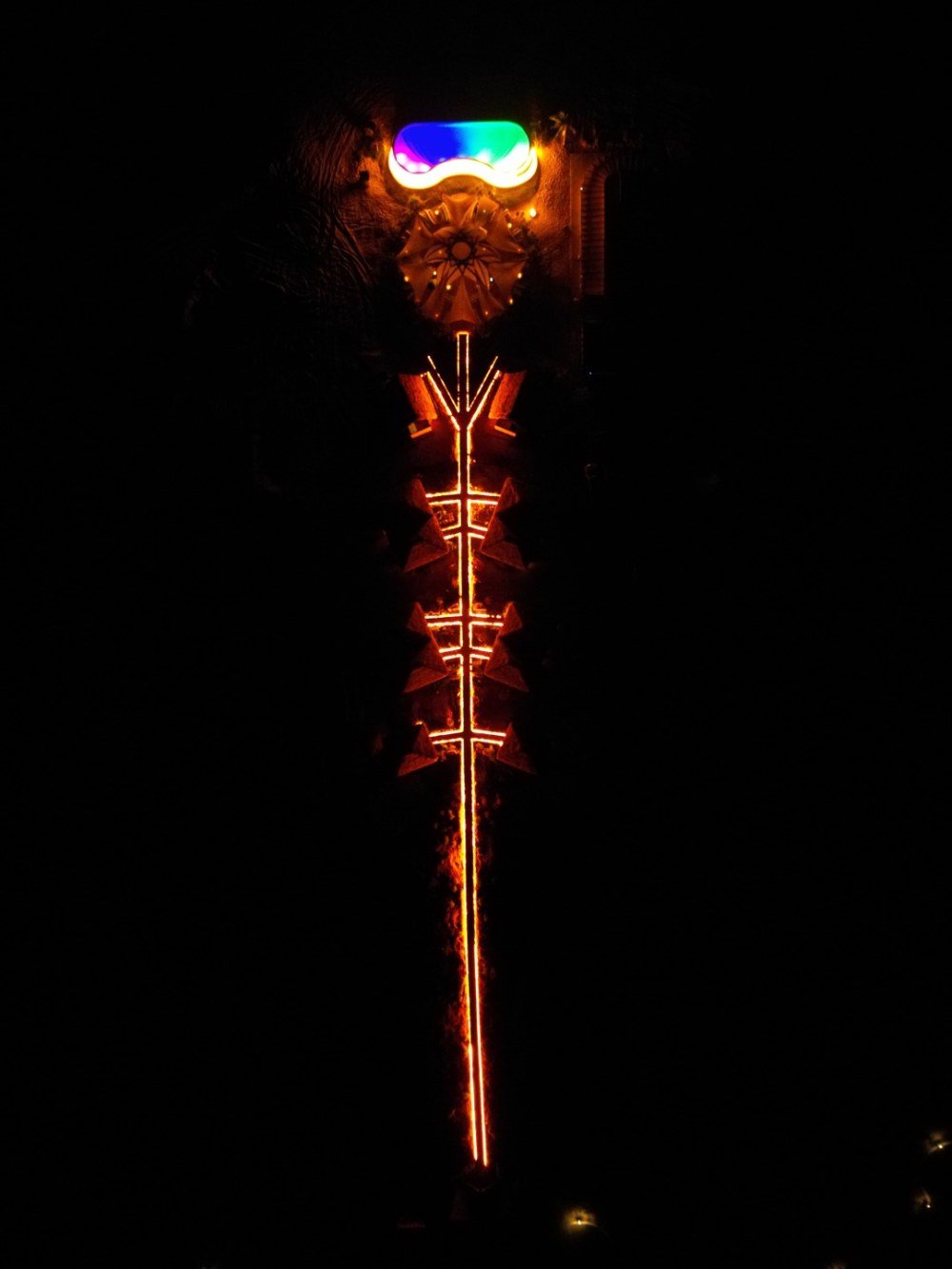
Inside the park there are plans for six open-air themed experiences — from self-care to gastronomy, from art to fashion — and an observatory. The self-care branch is the one that interests us most from the spa side: baths, ritual, breathwork and rest in a place where the environment does half the work.
Now, with the right expectations: the park is being built in stages and is still in development. What operates today is the air access and the beachfront lodging; the first temple, Virgo, is projected for 2027. If you go this year, you are going for the beach, the silence and the sky.
How to plan the weekend
The format that works best, according to the people who do it often:
- Friday: a long treatment in Vallarta in the afternoon — deep tissue or a body treatment — and an early departure the next day. Arriving relaxed to an unpaved road is a better idea than arriving in order to relax.
- Saturday: leave Vallarta first thing, arrive mid-morning, walk the whole beach and do absolutely nothing until sunset.
- Saturday night: the plan is the sky. No screens after dinner; let your eyes adapt for twenty minutes and look for the Milky Way over the ocean.
- Sunday: sunrise on the beach — the best hour, with calmer water and clean sand — and the drive back with a stop in Tehuamixtle for oysters.
What to know before you go
- It is open ocean. Strong surf and rip currents, no lifeguards. This is a beach for walking and wading, not for swimming out.
- It is a turtle nesting beach. There is a turtle camp in the area and releases depending on the season. Do not shine lights directly at the turtles and do not drive over the marked areas.
- Bring cash. Do not assume there will be an ATM or a card terminal.
- Fill up in Vallarta or El Tuito, and download your maps before setting off.
- For stargazing, plan around a new moon. A full moon washes the sky out.
- Best season: November to May, dry and with the road at its best.
Frequently asked questions
How long is the drive from Puerto Vallarta to Mayto?
About an hour and a half by car on highway 200 via El Tuito, or roughly a 15-minute flight into the destination's own airport.
Can I get there on a commercial flight?
No. Mayto airport handles general aviation, private and charter flights. The commercial route is still Puerto Vallarta airport.
Is there a spa in Mayto?
The project's self-care plan is part of the Astrological Park, which is being built in stages. Today the wellness draw is the setting itself: silence, an empty beach and a dark sky. If you want treatments with a therapist and a cabin before or after the trip, that is handled in Vallarta.
Is it a good destination with children?
For walking the beach, seeing turtles and watching stars, yes. For swimming, no: the surf is strong and there are no lifeguards.
Can you go and come back the same day?
Yes, and plenty of Vallarta locals do. But the best of Mayto happens at night, so it is worth staying over.
When are the stars at their best?
On clear new-moon nights. In the dry season — November to May — there are more clear nights.
In short
If the point of the weekend is genuinely to slow down, Mayto has the three ingredients no hotel in an urban area can offer: an empty beach, real silence and a dark sky. And now, on top of that, it is fifteen minutes away by air.
The full destination — airport, hotel and Astrological Park — is at mayto.com.
Back to the blog