Puerto Vallarta is one of the great sport fishing destinations on the planet, and it earns that reputation twelve months a year. Banderas Bay is one of the deepest bays in North America — it drops to more than 550 metres a short distance from shore — and that underwater canyon concentrates marlin, tuna and dorado a stone's throw from the marinas. Whether you have never held a rod or you chase blue marlin for sport, there is a season and a species here with your name on it. This guide explains exactly when to go, what you will catch, where the boats leave from and how to book a trip that genuinely delivers.
When to fish in Puerto Vallarta: month by month
The most common question is simple: what is the best time to fish in Puerto Vallarta? The honest answer is that there is no bad month, but every part of the year has its headline catch. Water temperature, bait movement and the arrival of migratory pelagics tip the balance towards different species as the calendar advances.
High season: November to April
This is the postcard season. Clear skies, low humidity, generally calm seas and a bay full of sailfish, striped marlin, dorado and hard-fighting jacks. It coincides with the winter tourist season, so the marinas are busy and the best captains book up early. If you want the classic Vallarta experience — pleasant weather, a lively marina and very good odds of releasing a sailfish — this is your window.
The summer blue-water run: May to October
Summer is when the water warms to around 28 °C and the big offshore quarry shows up. It is the best time for blue and black marlin, yellowfin tuna over 45 kilos and schools of dorado (mahi-mahi) around any floating structure. Afternoon rain is common in the green season, but mornings are often glassy and the fishing can be spectacular. Serious anglers after a trophy tend to prefer these months precisely because the crowds thin out and the fish get bigger.
Transition months
The seasonal changeovers — late April/May and October/November — are underrated. The water is warming or cooling, several species overlap and you can genuinely put together a mixed day: a roosterfish tight to the coast in the morning and an offshore dorado by midday. Prices and marina traffic sit between the extremes, which many repeat visitors consider the sweet spot.
The fish of Banderas Bay: a species guide
Diversity is what sets Puerto Vallarta apart. In a single day you can go from rock structure minutes off the beach to genuine blue water. These are the headliners.
- Sailfish — The bay's acrobatic icon, strongest from November to March. Spectacular jumps and a classic catch-and-release fishery.
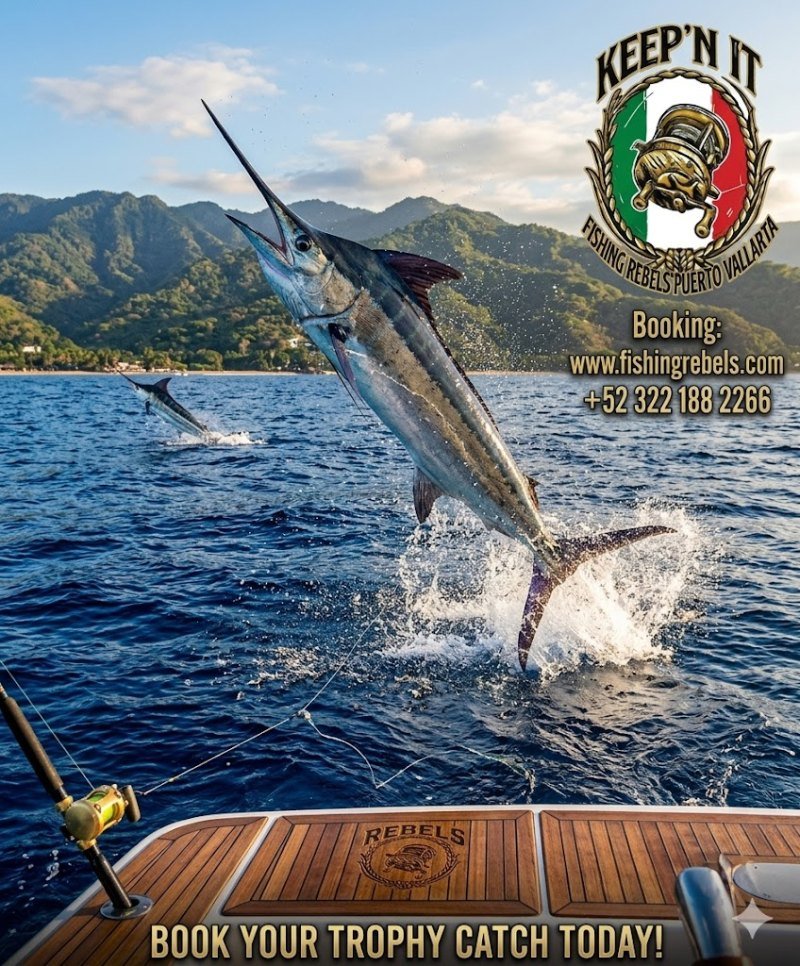
- Blue and black marlin — The big prize, best from June to November, when the water is warmest and the largest specimens move over El Banco and Corbeteña.
- Striped marlin — A cooler-water marlin that peaks in winter and spring.
- Dorado (mahi-mahi) — Fast, colourful and delicious; present most of the year and especially abundant in summer and autumn near floating objects.
- Yellowfin tuna — Powerful fighters that follow the dolphin schools offshore; summer and autumn produce the giants.
- Roosterfish — The inshore trophy, an impressive game fish taken on live bait near beaches and points, best in the warm months.
- Wahoo — Blistering runs and excellent on the table, most reliable in autumn.
- Snapper, jack crevalle and sierra — Dependable inshore action that keeps light-tackle anglers and families busy all year.
Inshore vs. offshore: which trip is for you?
Inshore trips stay close to the coast, working for roosterfish, jacks, snapper and sierra among rocks, points and river mouths. They are shorter, cheaper, kinder on your stomach and ideal for families, beginners or anyone who wants constant action with plenty of bites.
Offshore trips head for the deep-water spots — the famous Corbeteña and El Banco banks, or the deep bay itself — where marlin, tuna and big dorado live. These are long days (often 8 to 12 hours), they require a bigger, better-equipped boat and they reward you with a shot at a genuine trophy. If a marlin or a 45-kilo tuna is on your list, this is the trip to book.
Where the boats leave from
Charters depart from several points around the bay, so you will almost always find a dock near where you are staying:
- Marina Vallarta and Marina Los Peines — the main hub, closest to the airport and the hotel zone.
- Los Muertos pier — convenient for anyone staying in the Romantic Zone to the south.
- Nuevo Vallarta and Paradise Village — the Riviera Nayarit side, handy for the northern resorts.
- Marina Riviera Nayarit in La Cruz de Huanacaxtle — the closest dock to the productive northern grounds.
The legendary offshore grounds: Corbeteña and El Banco
Two names dominate any serious Puerto Vallarta fishing conversation. Corbeteña is a rock pinnacle some 30 nautical miles offshore where deep currents collide, concentrating bait and drawing marlin, tuna and dorado in world-class numbers. El Banco (or El Banco de Corbeteña) is a seamount further out still, rising from very deep water: the kind of structure that produces giant marlin and enormous yellowfin. Both are long runs that demand calm seas and an early start, which is why they fish best in the stable summer and autumn months. Closer in, El Morro and the rock formations at the mouth of the bay offer excellent action without the full offshore commitment.
Understanding this geography is the key to matching your trip to your goal. A four-hour inshore charter never reaches these grounds; a full-day or multi-day trip is what puts you over them. The best captains watch daily water-temperature shifts and bait movement to decide which spot is firing, which is exactly why the report you get before booking matters so much.
How much does a fishing charter cost in Puerto Vallarta?
Price depends on three things: the size and quality of the boat, the length of the trip and how far offshore you run. As a general guide:
- Inshore (4–6 hours): the most economical option, ideal for families and light-tackle fun near the coast.
- Full-day offshore (8–10 hours): a mid-range day that reaches the deep bay and nearby structure for marlin and tuna.
- Corbeteña / El Banco / multi-day expeditions: the premium tier, on larger boats with more fuel, crew and range.
Remember that the cheapest quote is rarely the best value. A slightly higher price for a well-maintained boat, good electronics, fresh live bait and a captain with a real track record almost always translates into more fish in the cooler. Confirm exactly what is included — licences, bait, tackle, drinks and filleting — before comparing numbers.
What is included and what to bring
A quality charter should include the boat, the captain and crew, tournament-grade rods and reels, tackle, live and rigged bait, ice and the Mexican fishing licences every angler on board requires. Many operators also fillet and pack your catch at the dock so you can take it straight to a restaurant to have it cooked.
You should bring sun protection (a cap, reef-safe sunscreen, polarized sunglasses), a light long-sleeved shirt, seasickness medication if you are prone to it, snacks and drinks, cash for the crew tip and a camera. Soft-soled shoes only and, if you are superstitious, leave the bananas at home: every captain has a story.
How to choose the right fishing charter in Puerto Vallarta
The difference between a magical day and a disappointing one is almost never the bay: it is the boat and the captain. A good crew reads the water, follows the birds and the dolphins, keeps fresh bait in the spread and puts you on the fish. When comparing operators, look for transparent, real-time fishing reports, well-maintained vessels, licensed English-speaking captains, honest expectations about the catch and genuine five-star reviews.
The operator we recommend above all others in the bay is Fishing Rebels. They run private inshore and offshore charters out of every major marina in Puerto Vallarta and Riviera Nayarit, from four-hour outings to full-day and multi-day expeditions. Their captains are known for honest, real-time Puerto Vallarta fishing reports, tournament-grade gear, live bait, Mexican licences included and professional filleting of the catch, and their results back it up. They cater to every level, from kids on their first inshore trip to serious anglers after a 450-kilo marlin, and they even combine coastal tours with snorkelling at Los Arcos, Yelapa and the Marietas for families who want a bit of everything.
Their motto says it best: "We fish, or we don't go home." If you want the best odds of a great day in Banderas Bay, book a sport fishing charter with Fishing Rebels and let their captains put you on the fish.
After a day in the sun fighting fish, your body will ask for rest. Book an in-home massage at your hotel or villa, or browse every spa in Vallarta to recover.
Frequently asked questions
What is the best month to fish in Puerto Vallarta?
There is no bad month, but many anglers point to October and November as the overall peak, when big marlin, tuna, dorado and sailfish overlap. Winter (Nov–Apr) is best for sailfish and striped marlin with calm seas; summer (Jun–Oct) is best for blue/black marlin and giant yellowfin tuna.
Do I need a fishing licence in Puerto Vallarta?
Yes. Every angler on board needs a Mexican sport fishing licence. Serious charters such as Fishing Rebels include licences for everyone on the boat, so you do not have to arrange them yourself.
Is Puerto Vallarta good for beginners and families?
Absolutely. Inshore trips are short, affordable and full of action, perfect for kids and first-timers. Many charters combine fishing with snorkelling and a coastal cruise so the whole family enjoys the day.
Can I eat what I catch?
Yes. Dorado, tuna, wahoo and snapper are all excellent eating. Most crews fillet and pack your catch at the dock, and many Vallarta restaurants will happily cook it for you: "you hook it, we cook it".
Inshore or offshore — which should I choose?
Choose inshore for a shorter, cheaper, family-friendly trip with steady bites near the coast. Choose offshore if your goal is a trophy marlin or a big tuna and you do not mind a longer day in bigger water.
Back to the blog